
Overview
A tale of love and ambition unfolds in the heart of 19th century Japan.
Ember's analysis
- Pacing
- Measured
- Intensity
- Strong
- Complexity
- Layered
- Violence
- None
- melancholic
- wistful
- austere
- quiet evening
- classic cinema viewing
What critics said
Critics broadly regard the film as a major early achievement of Japanese cinema, praising its emotional depth, visual composition, and rigorous depiction of kabuki culture.
What sets it apart
May contain story progression spoilers
Kikunosuke and Otoku are separated by his position in a prestigious kabuki family and her employment as a wet-nurse.
Kikunosuke learns that praise for his acting is tied to his adoptive father's stature rather than his own ability.
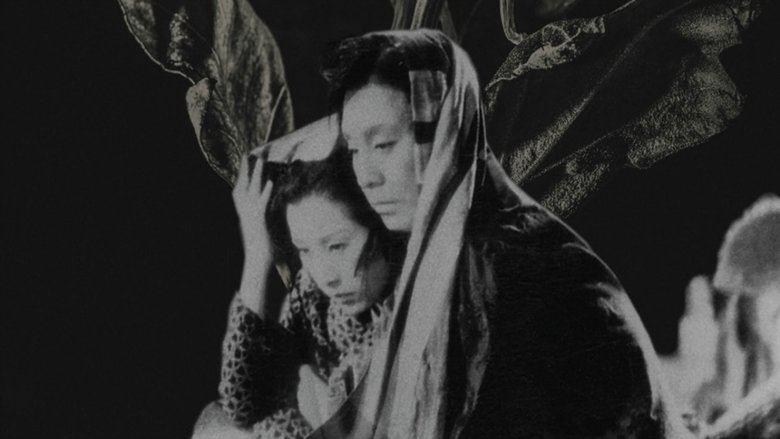
The film's kabuki-centered drama uses extended compositions to observe actors, spectators, domestic interiors, and performance spaces.
Otoku supports Kikunosuke's effort to earn recognition as an actor even as their relationship remains socially costly.
Films like The Story of the Last Chrysanthemum, and why
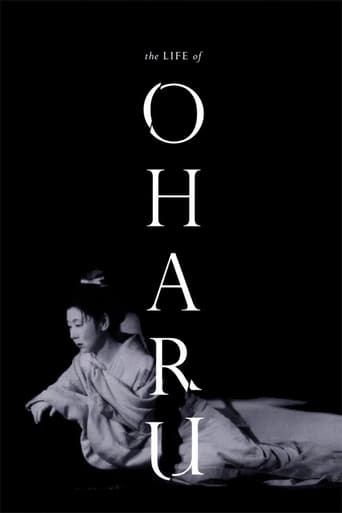
The Life of Oharu
shared forbidden romance, theatrical milieu, social hierarchy, and emotionally devastating melodrama
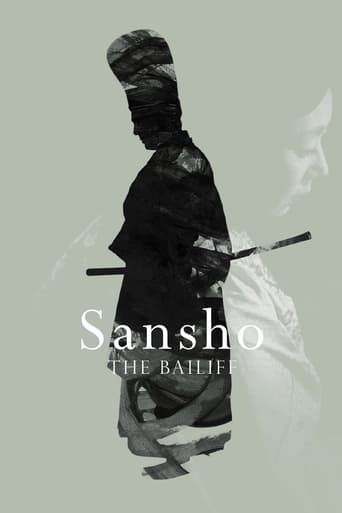
Sansho the Bailiff
shared mizoguchian social critique, sacrificial love, period setting, and restrained visual composition
Floating Clouds
shared kabuki world, family obligation, artistic ambition, and intimate japanese period drama
The Human Condition
shared doomed romance, class barriers, and formal historical melodrama centered on social constraint
Movie Details
- Director
- Kenji Mizoguchi
- Release Date
- 1939-10-13
- Runtime
- 144 min
- Rating
- 7.8 / 10 (133)
Cast
- Shōtarō Hanayagi
- Kakuko Mori
- Kōkichi Takada
- Kinnosuke Takamatsu
- Gonjurô Kawarazaki
- Benkei Shiganoya
- Kikuko Hanaoka
- Nobuko Fushimi
- Ichiro Yuki
- Tokusaburo Arashi
Where to watch in United States
- Streaming
- Criterion Channel
- Rent
- Apple TV Store, Google Play Movies, YouTube, Fandango At Home
- Buy
- Apple TV Store, Google Play Movies, YouTube, Fandango At Home
Streaming options come from TMDB and change over time.
Common questions
- What is The Story of the Last Chrysanthemum about?
- A gifted but disgraced kabuki heir and the devoted servant who believes in him pursue artistic legitimacy and forbidden love across Meiji-era Japan.
- What is The Story of the Last Chrysanthemum like to watch?
- Ember's analysis rates the pacing of The Story of the Last Chrysanthemum as measured, its intensity as strong and its storytelling as layered.
- Is The Story of the Last Chrysanthemum violent?
- No — Ember's analysis finds no violence in The Story of the Last Chrysanthemum.
- What did critics think of The Story of the Last Chrysanthemum?
- Critics broadly regard the film as a major early achievement of Japanese cinema, praising its emotional depth, visual composition, and rigorous depiction of kabuki culture.
- Which films are like The Story of the Last Chrysanthemum?
- Films with a similar feel include The Life of Oharu, Sansho the Bailiff, Floating Clouds, and The Human Condition.
- How long is The Story of the Last Chrysanthemum?
- The Story of the Last Chrysanthemum runs 144 minutes.
- Where can I watch The Story of the Last Chrysanthemum?
- In United States, The Story of the Last Chrysanthemum streams on Criterion Channel.