
Overview
A pacifist's moral convictions are put to the ultimate test in a war-torn landscape.
Ember's analysis
- Pacing
- Measured
- Intensity
- Strong
- Complexity
- Layered
- Violence
- Graphic
- harrowing
- austere
- melancholic
- historical cinema study
- serious weekend viewing
What critics said
Critics broadly regard the film as a powerful, morally serious wartime epic distinguished by Kobayashi’s direction and Giyū Miyajima’s cinematography, though its imposing length limits accessibility.
What sets it apart
May contain story progression spoilers
Kaji improves labor conditions at the mine, but his opposition to exploitation and military brutality brings punishment from the corrupt system.
Kaji is introduced as a pacifist and humanist, protests executions of Chinese POWs, and is later accused of being Red.
The 204-minute first installment follows Kaji from civilian mine supervisor through arrest, torture, release, and forced military summons.
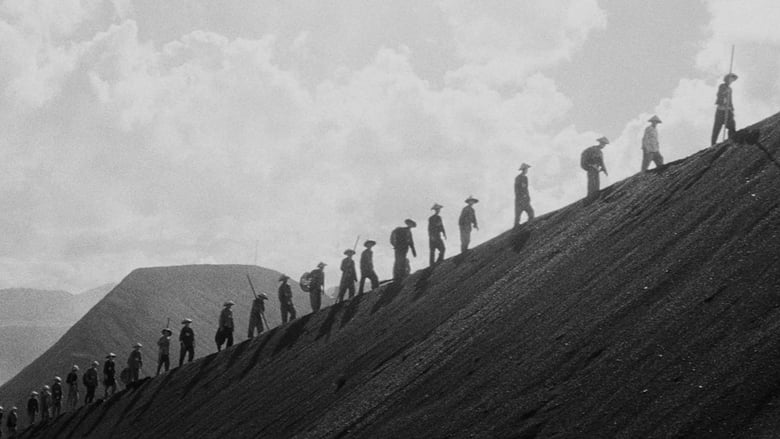
The Manchurian mining settlement, barbed-wire fences, shallow graves, and recurring snow create an austere landscape of confinement.
Films like The Human Condition I: No Greater Love, and why
The Human Condition II: Road to Eternity
shared anti-fascist humanism, wartime moral conflict, and morally serious historical drama
Fires on the Plain
shared japanese wartime setting, pacifist perspective, and sustained critique of military brutality
The Bridge on the River Kwai
shared epic war-film scale, prisoner abuse, and ethical resistance to dehumanizing institutions
The Burmese Harp
shared black-and-white historical drama, conscientious moral opposition, and institutional violence
Movie Details
- Director
- Masaki Kobayashi
- Release Date
- 1959-01-15
- Runtime
- 204 min
- Rating
- 8.1 / 10 (299)
Cast
- Tatsuya Nakadai
- Michiyo Aratama
- Chikage Awashima
- Ineko Arima
- So Yamamura
- Akira Ishihama
- Kōji Nanbara
- Seiji Miyaguchi
- Tōru Abe
- Masao Mishima
Where to watch in United States
- Streaming
- Criterion Channel
Streaming options come from TMDB and change over time.
Common questions
- What is The Human Condition I: No Greater Love about?
- A principled Japanese mine supervisor confronts the brutal machinery of wartime occupation when humane reforms collide with military terror.
- What is The Human Condition I: No Greater Love like to watch?
- Ember's analysis rates the pacing of The Human Condition I: No Greater Love as measured, its intensity as strong and its storytelling as layered.
- Is The Human Condition I: No Greater Love violent?
- Yes. Ember rates the violence in The Human Condition I: No Greater Love as graphic.
- What did critics think of The Human Condition I: No Greater Love?
- Critics broadly regard the film as a powerful, morally serious wartime epic distinguished by Kobayashi’s direction and Giyū Miyajima’s cinematography, though its imposing length limits accessibility.
- Which films are like The Human Condition I: No Greater Love?
- Films with a similar feel include The Human Condition II: Road to Eternity, Fires on the Plain, The Bridge on the River Kwai, and The Burmese Harp.
- How long is The Human Condition I: No Greater Love?
- The Human Condition I: No Greater Love runs 204 minutes.
- Where can I watch The Human Condition I: No Greater Love?
- In United States, The Human Condition I: No Greater Love streams on Criterion Channel.